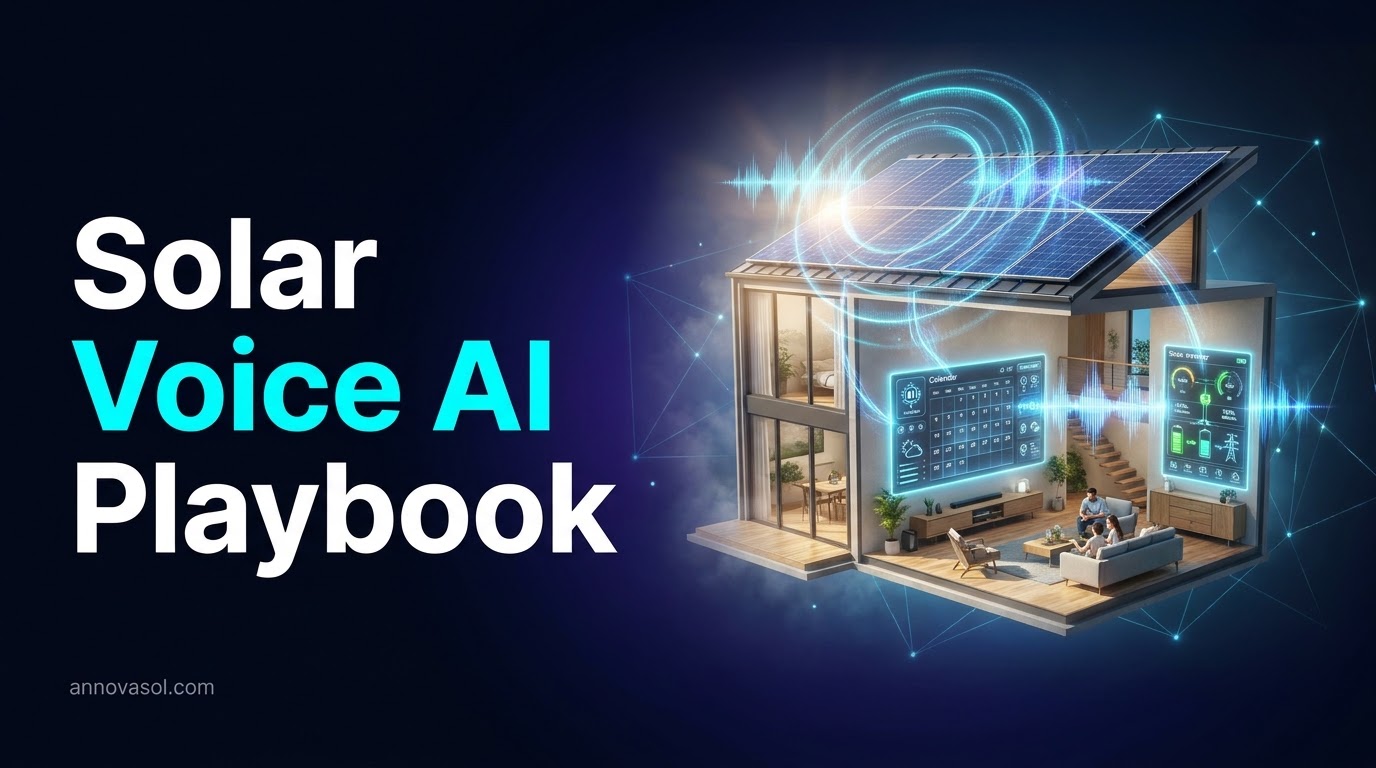
Solar SalesAI Voice AgentsLead QualificationSales Automation
AI Calling Agent for Solar Companies: The 2026 Playbook
Deploy an ai calling agent for solar companies to dial leads in seconds, qualify homeowners, book appointments, cut CAC, and scale residential solar sales.
Soft costs now account for 60 to 65 percent of the total price tag of a residential solar system, according to industry benchmarks reported by Ringlyn. While manufacturing efficiencies have driven hardware prices lower over the past decade, solar sales and marketing overhead remains stubbornly high. With customer acquisition costs regularly reaching 2,000 to 5,000 dollars per signed contract, deploying an ai calling agent for solar companies has transformed from an experimental tactic into an operational necessity. High lead costs and shrinking installation margins mean solar contractors can no longer afford uncalled leads, delayed outreach, or manual qualification bottlenecks.
Residential solar installers face intense unit economic pressure. Wood Mackenzie projects residential customer acquisition costs to reach 0.84 dollars per watt in 2026. For an average residential project, sales acquisition alone consumes several thousand dollars of margin before a single panel touches the roof. When leads cost 150 to 300 dollars apiece from paid campaigns or third party aggregators, letting those inquiries sit in a CRM for even fifteen minutes destroys capital. Autonomous conversational voice agents resolve this structural failure by contacting, vetting, and scheduling prospects the instant interest is expressed.
What Is an AI Calling Agent for Solar Companies and How Does It Work?
An ai calling agent for solar companies is an autonomous voice application powered by advanced large language models, natural speech synthesis, and real time telephony integration. Unlike rigid legacy interactive voice response systems that force users through frustrating numeric menus, a modern voice agent conducts fluid, latency free spoken conversations. It understands human accents, handles mid sentence interruptions, parses colloquial phrasing, and answers technical energy questions with contextually accurate information.
The operational architecture of a solar voice agent relies on a low latency speech to speech pipeline. When a call connects, the following four tier engine processes the exchange in under 600 milliseconds:
Voice Stream Ingestion: The homeowner audio stream enters via standard WebRTC or SIP trunking protocols managed through telephony carriers.
Real Time Transcription: Streaming deep learning speech to text models transcribe spoken homeowner audio into clean text tokens while filtering background neighborhood noise.
Reasoning and Context Logic: An orchestration engine running an LLM analyzes the prospect input, references the solar company custom knowledge base, evaluates conversation parameters, and selects the next prompt or tool call.
Natural Speech Generation: Neural text to speech models synthesize the agent response into natural human cadence, utilizing realistic breathing pauses, pitch variation, and localized vocal tonality.
Beyond basic conversation, the voice agent executes operational actions through API connections. When a homeowner confirms their roof age or average monthly electric spend, the voice agent pushes those custom values into CRM properties, initiates two way calendar checks, and triggers real time notifications to sales representatives.
The technology handles both inbound inquiries and programmatic outbound campaigns. On inbound traffic, it acts as an intelligent virtual concierge, capturing property details and routing callers. On outbound workflows, it dials newly submitted digital lead forms instantly or systematically reactivates cold database contacts from past marketing seasons.
The Speed to Lead Dilemma: Eliminating Solar Lead Decay in Under 60 Seconds
Speed is the critical factor governing residential solar conversion rates. Research from the MIT Lead Response Management study, as cited by SalesCloser AI, established that the odds of successfully contacting and qualifying an online lead drop precipitously between 5 minutes and 10 minutes. After 30 minutes, most consumers have shifted their attention elsewhere, browse competitor offerings, or fail to recognize the calling phone number.
In traditional residential sales models, an inbound digital lead passes from an ad platform into a lead aggregator, enters an email queue, and waits for a human inside sales rep to pick up the task. By the time an internal setter dials the number, twenty to ninety minutes have routinely elapsed. In competitive markets, prospective customers submit inquiry forms on comparison portals that distribute information to three to four installation companies simultaneously. The first business to reach the homeowner secures the conversation in over seventy percent of closed contracts.
Data compiled by Ringlyn demonstrates that human driven solar sales teams achieve contact rates between 30 and 40 percent on initial outreach. Conversely, automated voice systems initiate calls within 15 to 45 seconds of form submission, producing verified contact rates exceeding 95 percent.
When outreach occurs while the homeowner still holds their smartphone and reviews your landing page, friction vanishes. The conversation feels natural, timely, and helpful rather than intrusive. Similar improvements in lead response dynamics are visible across other high consideration sectors, as documented in our analysis of AI calling agents for real estate.
How Solar AI Agents Qualify Homeowners: The Exact Questioning Framework
Booking appointments with unqualified prospects wastes costly sales hours. If an outside energy consultant drives an hour to an in person site assessment only to discover the prospect rents the house or has a 450 credit score, gross operational margin erodes immediately.
Understanding how solar ai agents qualify homeowners requires reviewing the precise conversational decision trees programmed into their logic layer. A production grade solar agent qualifies prospects across seven core operational dimensions:
Property Ownership: The agent verifies whether the contact owns a single family detached residence. Multi family structures, commercial properties, and rental units possess distinct ownership rights and utility agreements that disqualify standard residential power purchase agreements or solar loans.
Monthly Electric Expenditure: The caller checks utility bill thresholds. Most residential solar packages require a baseline average monthly utility cost of at least 100 to 150 dollars to generate clear monthly savings over existing electric rates.
Utility Provider and Rate Structure: The system confirms the local electric utility. Understanding whether the prospect operates under tiered rates, time of use billing, or net energy metering rules such as California NEM 3.0 dictates whether battery storage is mandatory for economic viability.
Roof Age and Structural Condition: The agent inquires about roof material and age. Roofs older than 15 years often require reroofing prior to solar bracket installation, which impacts project financing.
Shading and Tree Obstruction: The caller queries whether heavy tree canopy, surrounding hills, or neighboring buildings cause severe obstruction across south or west facing roof planes.
Credit Score Range: Because most residential solar installations are financed via third party consumer loans or leases, the agent gently determines if the homeowner meets baseline qualification requirements, typically 600 to 650 minimum credit scores.
Decision Maker Presence: The voice system confirms whether all deeded property owners will attend the design review to ensure clean same day contracting.
Production agents must also handle complex objections and technical inquiries smoothly. Below are exact prompt logic and script structures implemented in high converting solar deployments:
Handling the Robot Question
Homeowner: Wait a second, am I talking to a robot or a real person?
Voice Agent: I am an automated energy assistant calling on behalf of SunPeak Solar. I help handle our immediate calls so you do not have to wait on hold. My system is reviewing your address right now to verify solar eligibility. Do you have two minutes to see if your utility qualifies for local rate relief?
This response directly confirms machine identity, explains the functional consumer benefit, and redirects focus back to project qualification without conversational breakdown.
Handling NEM 3.0 and Battery Inquiries
Homeowner: I heard California killed solar savings with NEM 3.0. Why would I install panels now?
Voice Agent: That is a common concern. Under the updated net billing rules, the export credit utility companies pay for excess daytime power is lower. However, when we pair your array with a smart battery storage system, your home stores that surplus solar electricity and discharges it during expensive evening peak hours. That setup shields you from utility rate hikes. What does your current monthly electric bill run on average?
Credit Pre Vetting Without Alienation
Homeowner: Why do you need to know my credit score before anyone even looks at my roof?
Voice Agent: I completely understand. Our zero upfront cost financing programs are sponsored by clean energy lenders that require a standard credit tier, usually around 650, to waive down payments. We ask upfront simply to ensure we present payment options that match your exact situation during the design consultation. Would you say your score is comfortably in that range?
AI Calling Agent vs. Solar ISA: Unit Economics, Performance, and Burnout Comparison
To understand the financial transformation voice automation offers, solar leadership must analyze unit economics side by side. Residential solar sales organizations traditionally hire internal or offshore Inside Sales Agents (ISAs) to cold call lists, dial inbound web forms, and schedule appointments for field consultants.
Human solar appointment setters face repetitive rejection, complex dialer interfaces, and aggressive outbound calling cadences. Consequently, solar ISA roles experience annual turnover rates exceeding 150 percent. Every departure forces the business to recruit, onboard, and train replacements, running up recruiting costs and creating substantial periods of zero dialer productivity.
The table below contrasts the operational and financial profile of internal human appointment setters, offshore call center reps, and autonomous voice agents:
Performance MetricIn House Domestic ISAOffshore Human ISAAI Calling AgentFully Burdened Monthly Cost$4,500 to $6,500 (Base + Commission)$1,800 to $2,800 (Agency Fee)$400 to $1,200 (Platform + Minutes)Effective Dial Capacity120 to 200 dials per 8 hour shift150 to 250 dials per 8 hour shift10,000+ simultaneous dials on demandSpeed to Lead Latency15 to 45 minutes average5 to 20 minutes averageSub 30 seconds, 24/7/365Script and Compliance Adherence75% to 88% (Fluctuates daily)65% to 82% (Fluctuates daily)100% deterministic script executionTurnover and Retraining CostsHigh (3 to 6 month average tenure)Moderate to High (Regular turnover)Zero turnover; instant model updatesConcurrent Call Capability1 active call at a time1 active call at a timeInfinite concurrent dynamic scalingCRM Logging and Data Accuracy70% to 85% complete notes60% to 75% complete notes100% structured data and recordingsCost Per Booked Appointment$180 to $320$110 to $190$22 to $48
The disparity in performance emerges most acutely during peak advertising traffic. If a solar marketing agency generates 300 inquiries on a Saturday afternoon following a localized power outage or severe utility rate hike, human teams get buried. Uncalled leads languish until Monday morning. An autonomous calling agent dials all 300 prospects simultaneously within 45 seconds, completing full 7 point qualifications and populating sales representative calendars while consumer interest remains at peak levels.
Similar productivity gains apply to operational and administrative intake pipelines across various industries, including workflows outlined in our guide to AI workflow automation for small business.
Measuring Solar AI Calling Agent Cost and ROI: Slashing Customer Acquisition Cost (CAC)
Evaluating the financial viability of voice automation requires assessing direct operational expenditures alongside pipeline yield improvements. Solar executives typically evaluate two primary commercial components when calculating solar ai calling agent cost:
Platform and Orchestration Fees: Software platform management, telephony provisioning, and ongoing system administration generally range from 300 to 1,500 dollars per month depending on active phone numbers and feature configurations.
Consumption and Token Usage: Voice pipeline costs combine telecommunication carrier transit, real time transcription, LLM processing tokens, and neural speech synthesis. These aggregate fees typically total 0.08 to 0.18 dollars per active conversation minute.
Because an average qualification call lasts approximately 2.5 to 3.5 minutes, the direct voice computing expense of vetting a homeowner is roughly 0.25 to 0.55 dollars. Even when factoring in failed dials and voicemail drops, the marginal processing cost per qualified contact is negligible compared to human labor overhead.
To illustrate the bottom line impact, consider the financial trajectory of a regional solar installer generating 1,000 paid marketing leads per month with an average lead purchase price of 200 dollars:
Total Monthly Lead Generation Spend: 200,000 dollars.
Traditional Human Model: The ISA team reaches 35 percent of leads, representing 350 homeowners. Of those reached, 50 percent qualify, yielding 175 prospects. Of those qualified, 40 percent book a site consultation, totaling 70 appointments. With an industry standard 70 percent show rate, 49 consultations occur. At a 25 percent close rate, the company signs 12 contracts. Customer acquisition cost per signed deal equals 16,666 dollars in media spend plus ISA compensation.
Autonomous AI Voice Model: The AI dials every submission within 30 seconds, elevating initial contact rates to 72 percent, representing 720 homeowners reached. Applying the identical 50 percent qualification standard yields 360 qualified prospects. Instant calendar booking secures an appointment booking rate of 48 percent, producing 172 booked consultations. Automated multi touch voice and SMS reminders raise completed show rates to 78 percent, resulting in 134 completed consultations. Closing at the same 25 percent rate generates 33 signed contracts.
Under this operational model, solar ai calling agent roi manifests immediately. By capturing perishable buyer intent, the installation company nearly triples closed deal volume from the exact same top of funnel advertising budget. Sales reps spend their days closing educated prospects rather than chasing unanswered dials.
CRM & Tech Stack Architecture: Integrating AI Callers with HubSpot, Aurora Solar, and Dialers
A voice agent cannot operate in an isolated silo. To maximize sales efficiency, it must fit directly into your existing enterprise stack. Setting up a solar ai calling agent with hubspot or Salesforce creates a closed loop system where data moves between customer records, scheduling engines, and proposal software.
Webhook Trigger and Instant Dispatch
When a prospective buyer completes an inquiry form on a native Facebook Lead Ad, an unbounce landing page, or a website portal, HubSpot creates a contact record. An automated HubSpot workflow immediately dispatches an outgoing HTTP POST webhook payload containing the prospect first name, phone number, address, and marketing campaign attribution to the AI agent runtime API endpoint.
Live Proposal Pre Population via Aurora Solar
For high volume tech forward installers, the voice agent engine can execute a background API call to Aurora Solar or Google Project Sunroof while the phone rings. By passing the home street address, the system retrieves estimated roof plane surface area, average solar irradiance, and estimated system offset capabilities. When the prospect answers, the agent speaks with localized precision, confirming that preliminary satellite data shows strong south facing sun exposure.
CRM Property Updates and Call Disposition Logging
During the conversation, natural language understanding nodes extract critical data variables and map them directly into standardized HubSpot contact properties:
monthly electric bill as a numerical value
roof age in years as a numerical value
homeowner status as a boolean confirmation
shading level categorized as none, partial, or heavy
credit band segmented into sub 600, 600 to 650, or 650 plus
call disposition logged as qualified scheduled, disqualified renter, or callback requested
Following call completion, the system automatically writes a comprehensive conversation summary, a synchronized audio recording link, and full text transcription directly to the HubSpot engagement timeline.
Warm Live Transfer Mechanics
When an exceptionally high intent homeowner is on the line, falling back to a calendar invite scheduled four days out introduces unnecessary drop off risk. Advanced implementations utilize real time SIP trunk warm transfer mechanics.
When a homeowner confirms property ownership, an electric bill above 200 dollars, and strong credit, the agent checks sales rep availability on a live queue. If a closer is online, the agent announces the transfer, dials the specialist via SIP, plays a brief whisper summary, and merges the homeowner directly into the call. If no rep answers within twelve seconds, the agent terminates the transfer attempt and seamlessly books an appointment on the closer calendar. Similar complex API scheduling systems are explored in our breakdown of AI sales agents for B2B lead generation.
Navigating TCPA, FCC 1 to 1 Consent, and STIR/SHAKEN Compliance for Outbound Solar AI
Compliance is non negotiable when utilizing automated telecommunications. The regulatory landscape governing outbound dialing, artificial voice technology, and lead generation underwent sweeping statutory shifts under the Federal Communications Commission (FCC) and the Telephone Consumer Protection Act (TCPA). Failing to build proper compliance frameworks leaves solar companies vulnerable to devastating regulatory enforcement and class action litigation.
The FCC One to One Consent Mandate
Historically, aggressive solar marketing organizations acquired shared leads from comparison shopping networks that buried language allowing hundreds of unseen marketing partners to call consumers under a single blanket consent checkbox.
Under the FCC one to one consent regulations, blanket consent mechanisms are strictly prohibited. Consumers must provide explicit, unambiguous written consent authorizing a single identified seller to contact them via automated technology or artificial voice. Solar operators must enforce the following compliance protocols:
First Party Capture: Transition away from multi vendor shared lead forms toward owned landing pages that clearly name your specific legal entity directly adjacent to the submission button.
Unchecked Explicit Checkbox: Lead capture pages must feature an unselected consent box stating that the consumer authorizes your business to deliver automated marketing calls or artificial voice communications.
Cryptographic Proof of Consent: Utilize verification tools like ActiveProspect TrustedForm or Jornaya leadID to generate dynamic session replay certificates verifying exactly when, where, and how the consumer executed consent.
STIR/SHAKEN Attestation and Caller ID Integrity
To prevent telecommunication carriers from aggressively tagging outbound calls as Spam Likely or blocking network connection entirely, outbound calling agents must comply with STIR/SHAKEN call authentication protocols:
Full Attestation A Rating: The originating telephony provider verifies that your business owns the telephone numbers being used and has authenticated customer identity. Operating with A level attestation dramatically increases pickup rates.
Branded Caller ID: Implement Rich Call Data protocols that display your verified company name and corporate logo on homeowner smartphone screens during inbound ringing.
Number Pool Management: Rotate call origination numbers systematically while monitoring carrier reputation databases. Avoid dialing dozens of calls per hour from a single unregistered phone number.
Daily Calling Windows and DNC Registry Adherence
Federal law limits telemarketing calls to the hours between 8:00 AM and 9:00 PM in the call recipient local time zone. Several states enforce more restrictive windows, such as Florida and Oklahoma, which restrict telemarketing outreach past 8:00 PM.
An enterprise voice agent runtime must parse the geographical area code and physical postal address of every lead, validating local solar time before initiating an outbound connection. Furthermore, every outbound pipeline must run real time scrubbing against national and state Do Not Call registries as well as company internal opt out databases. If a homeowner states that they want to be removed from calling lists, the LLM must instantly register the opt out disposition, flag the CRM record, and terminate the sequence.
How to Deploy, Script, and Optimize Your Solar AI Calling Agent in 5 Steps
Transitioning from manual prospecting to automated voice operations requires a structured implementation plan. Follow this five step engineering roadmap to design, deploy, and scale your solar voice agent:
Map Your Sales Qualification Matrix: Define explicit disqualification thresholds before writing prompts. Specify your minimum monthly utility spend, acceptable roofing surfaces such as asphalt shingle, standing seam metal, or flat tile, structural shade limits, and credit requirements.
Draft Context Aware Conversation Prompts: Construct operational system instructions that guide the model tone and conversational boundaries. Instruct the agent to speak conversationally, maintain concise answers, ask only one qualifying question per conversational turn, and redirect common technical deviations back to appointment booking.
Establish Telephony and Carrier Routing: Secure dedicated local phone numbers matching the target marketing regions. File appropriate business identity verification documentation with your voice carrier to guarantee STIR/SHAKEN Level A attestation across all outbound trunks.
Construct CRM Webhooks and Automation Workflows: Integrate your conversational runtime with HubSpot, Salesforce, or your proprietary dialer. Establish bidirectional data synchronization to log call transcripts, schedule calendar invites, and trigger instant warm transfers to sales reps.
Execute Controlled Sandbox Testing and Real World Optimization: Conduct internal roleplay simulations across common customer personas, thick accents, background noise environments, and hostile objection scenarios. Launch the agent on a limited batch of aged leads before opening live traffic to freshly generated inbound advertising funnels. Continually monitor call recordings to identify conversational drop off points and refine system prompts.
Sources
Ready to Automate Solar Lead Intake and Booking?
At Annovasol AI, we engineer custom voice agents that dial inbound solar leads in under thirty seconds, qualify homeowner suitability across strict utility and roof criteria, and sync directly with your CRM.
Frequently asked questions
How much does an AI calling agent for solar companies cost?
An ai calling agent for solar companies typically costs between 300 and 1,500 dollars per month for platform software access, combined with telephony usage fees of 0.08 to 0.18 dollars per minute. Because an average qualification call lasts roughly three minutes, the direct computing expense per lead ranges between twenty and fifty cents. Setup fees vary based on custom CRM integration requirements.
What kind of ROI can a solar company expect from deploying an AI calling agent?
Solar companies deploying voice automation routinely achieve a 40 to 60 percent reduction in customer acquisition costs while significantly boosting consultation volume. Reaching leads in under 45 seconds pushes contact rates above 70 percent. This rapid qualification nearly triples signed installation agreements from existing marketing budgets without adding extra sales development headcount or expensive call center overhead.
How does an AI calling agent compare to a human solar ISA (Inside Sales Agent)?
An AI calling agent operates at roughly eighty to ninety percent lower expense than a human appointment setter while providing instant speed to lead and unlimited concurrent calling capacity. Human appointment setters face fatigue, inconsistent pitch delivery, and extreme turnover rates. Conversely, voice agents execute sales scripts deterministically, update CRM fields flawlessly, and never experience burnout during aggressive dialing shifts.
How do solar AI agents qualify homeowners before booking an assessment?
Solar AI agents screen prospects through conversational discovery covering single family homeownership, monthly electricity expenditures, utility rate schedules, roof condition, roof shading, and credit score ranges. By filtering out renters, low usage households, and shaded properties automatically, the system protects field energy consultants from traveling to unproductive consultations, ensuring company closers meet only with credit qualified prospective buyers.
How does a solar AI calling agent integrate with HubSpot or industry CRMs?
Integration operates via webhooks and REST APIs connecting the telephony runtime directly to HubSpot or Salesforce records. When an ad form creates a contact, a webhook triggers the dialer instantly. As the conversation progresses, extracted variables sync to contact properties in real time. Full call recordings, text transcripts, and calendar appointments automatically populate the customer timeline upon call completion.
Can the AI voice agent execute a live warm transfer to a human sales rep?
Yes, advanced voice agents evaluate prospect criteria in real time and execute SIP trunk transfers when homeowners meet high value benchmarks. The system verifies closer availability on a WebRTC queue, dials the specialist, provides a quick whisper briefing detailing property and utility specifications, and merges the homeowner into the line. If no closer answers, it schedules a calendar booking.
How do outbound solar AI calling agents comply with TCPA and FCC regulations?
Compliance requires collecting explicit one to one prior express written consent on owned web forms, documented via TrustedForm or Jornaya certificates. Outbound platforms authenticate calls using STIR/SHAKEN Level A attestation, scrub national and state Do Not Call registries, honor immediate verbal opt out requests, and restrict outbound dialing strictly to permissible local calling hours between 8:00 AM and 8:00 PM.
What happens when a homeowner asks complex technical questions about NEM 3.0 or solar panels?
When prospects inquire about technical topics like California NEM 3.0, net billing tariffs, or battery backup storage, the agent accesses a curated technical knowledge base. It delivers clear, natural explanations detailing how solar plus storage configurations mitigate expensive peak time of use utility rates, then smoothly transitions the prospect back into scheduling a comprehensive professional energy evaluation.
How fast does an AI voice agent dial after a homeowner submits an online form?
Production voice agents trigger outbound calls within 15 to 45 seconds of form submission. By engaging prospects while they are actively browsing your landing page and holding their smartphones, the agent captures peak consumer intent. This instant speed eliminates the severe lead decay that causes contact rates to plummet when traditional sales teams delay follow up calls by fifteen minutes.
Can an AI calling agent handle both inbound inquiries and outbound lead follow-ups?
Yes, modern voice agents manage dual conversational pipelines seamlessly. On inbound traffic, the agent acts as an automated 24/7 receptionist that answers customer inquiries, pre qualifies callers, and books consultations. On outbound pipelines, the system processes web form submissions, executes speed to lead sequences, and reactivates dormant lead databases through targeted re engagement campaigns.
AT
Written by
AnnovaSol Team
Building production AI at AnnovaSol — agents, RAG, voice systems.
Keep reading
More from the blog

AI Sales Agent for B2B Lead Generation: Complete 2026 Guide
Discover how an ai sales agent for b2b lead generation cuts customer acquisition costs, books meetings autonomously, and syncs clean pipeline into Salesforce.
October 30, 2026

AI Receptionist for HVAC Companies: 2026 Setup Playbook
Deploy an ai receptionist for hvac companies to answer 24/7 calls, triage gas leaks, route emergency dispatch, and book directly into ServiceTitan in real time.
October 30, 2026

AI Receptionist for Medical Office: 2026 Implementation Guide
Deploying an ai receptionist for medical office workflows cuts missed calls and syncs with EHR systems. Discover 2026 pricing, HIPAA rules, and ROI.
October 29, 2026